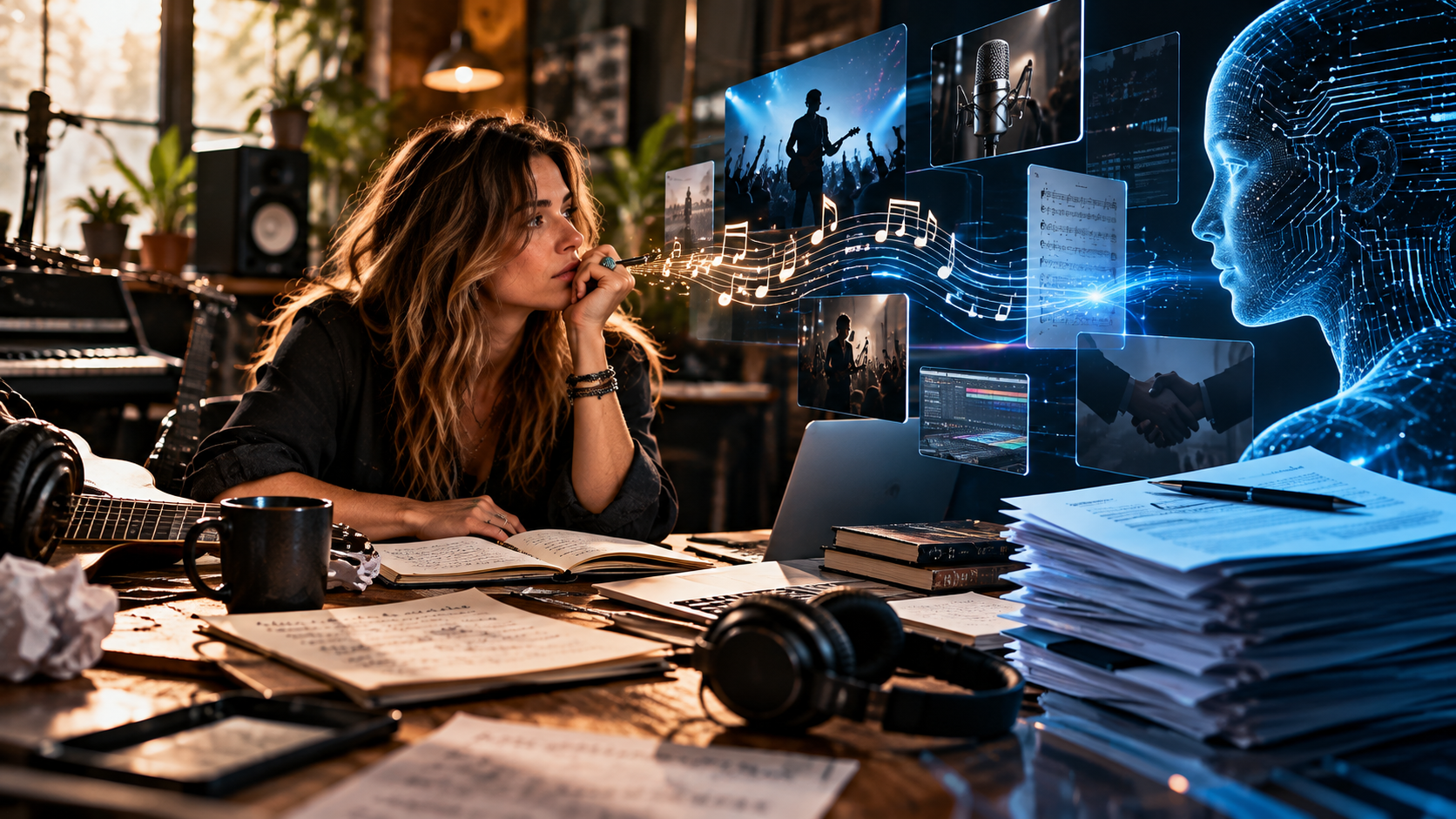
The music industry’s battle over artificial intelligence is beginning to move beyond whether AI can use copyrighted music.
The next fight may be over who gets to say yes, and who gets paid when they do.
For the past several years, much of the music industry’s conversation around generative AI has centered on infringement. Record companies, publishers, songwriters and artists have challenged AI companies over the use of copyrighted recordings and compositions to train systems capable of generating new music.
Now the conversation is changing.
Major music companies are beginning to negotiate licensing arrangements with AI platforms, creating the possibility of authorized models built around participating catalogs and artists. New agreements are also beginning to introduce opt-in structures, giving participating rights holders greater control over whether their music is included.
For creators, that represents an important shift. The question is no longer simply whether AI companies should license music. Increasingly, it is becoming how those licenses work, who has the authority to grant them and how the resulting money reaches the people who created the music.
That distinction matters because a recording and a song are not the same copyright. A label may control rights in a master recording while publishers and songwriters control rights in the underlying composition. Performers, producers and other participants may have additional contractual interests.
AI potentially touches all of them.
From Consumption to Creation
Traditional streaming largely monetizes consumption. Someone chooses a recording, presses play and royalties flow through an established, if complicated, system of rights and agreements.
Generative AI introduces a different proposition. Existing music can potentially contribute to systems capable of creating entirely new recordings.
That raises questions the industry is only beginning to answer. What does it mean for an artist to opt into an AI model? Can a voice or musical identity be licensed separately from a recording? How should songwriters be compensated when compositions contribute to AI-generated outputs? Should payments be tied to training, generation, usage, revenue or some combination of them?
There is not yet one industry-wide answer.
Some music executives are positioning licensed AI creation as a potential new source of revenue for artists and songwriters. If that develops at scale, it could eventually create another category of music income. But the economics, accounting and contractual details will determine how meaningful that opportunity becomes for individual creators.
Consent Is Becoming Part of the Business Model
One of the most significant developments is the emergence of opt-in models.
Rather than treating entire catalogs as automatically available for AI applications, some new arrangements are creating mechanisms for participating artists and rights holders to choose whether their repertoire is included.
That could become an important distinction as the market develops.
Broader tensions remain, however. Artists and songwriters continue to question how emerging AI agreements will operate, how compensation will be divided and how much control individual creators will have when labels, publishers or other companies negotiate on behalf of large catalogs.
At the same time, litigation has not disappeared. Copyright owners and creator organizations continue to challenge AI companies over alleged unauthorized uses of music.
The industry is therefore moving down two tracks simultaneously: negotiating a licensed future while continuing to fight over what happened before those licenses existed.
Songwriters Need to Understand What They Control
For songwriters, the emerging AI economy makes rights knowledge increasingly important.
Knowing who controls a composition, how publishing rights are divided, whether works are properly registered and what contractual authority has been granted to publishers or other partners could become increasingly consequential as new licensing categories develop.
That is no longer simply administrative housekeeping. Rights information may determine who can negotiate, who receives payment and whether a creator has a meaningful voice when new uses of a song are proposed.
The same applies to artists evaluating recording, publishing and distribution agreements. AI rights that once seemed hypothetical are becoming commercial terms with potential long-term value.
The music business has been through technological transitions before. Streaming began as a disruption and eventually became the economic foundation of recorded music. Social platforms created new licensing relationships. Short-form video changed how songs are discovered and monetized.
AI could become another significant licensing market.
But there is an important difference.
Streaming monetized listening to music that already existed. Generative AI may monetize the ability to create something new from what already exists.
That makes the rights conversation considerably more complicated.
For artists and songwriters, the most important development may therefore not be what AI can create next. It may be determining who controls the permission, what that permission is worth and how much of that value ultimately reaches the people whose work helped make the technology commercially useful.