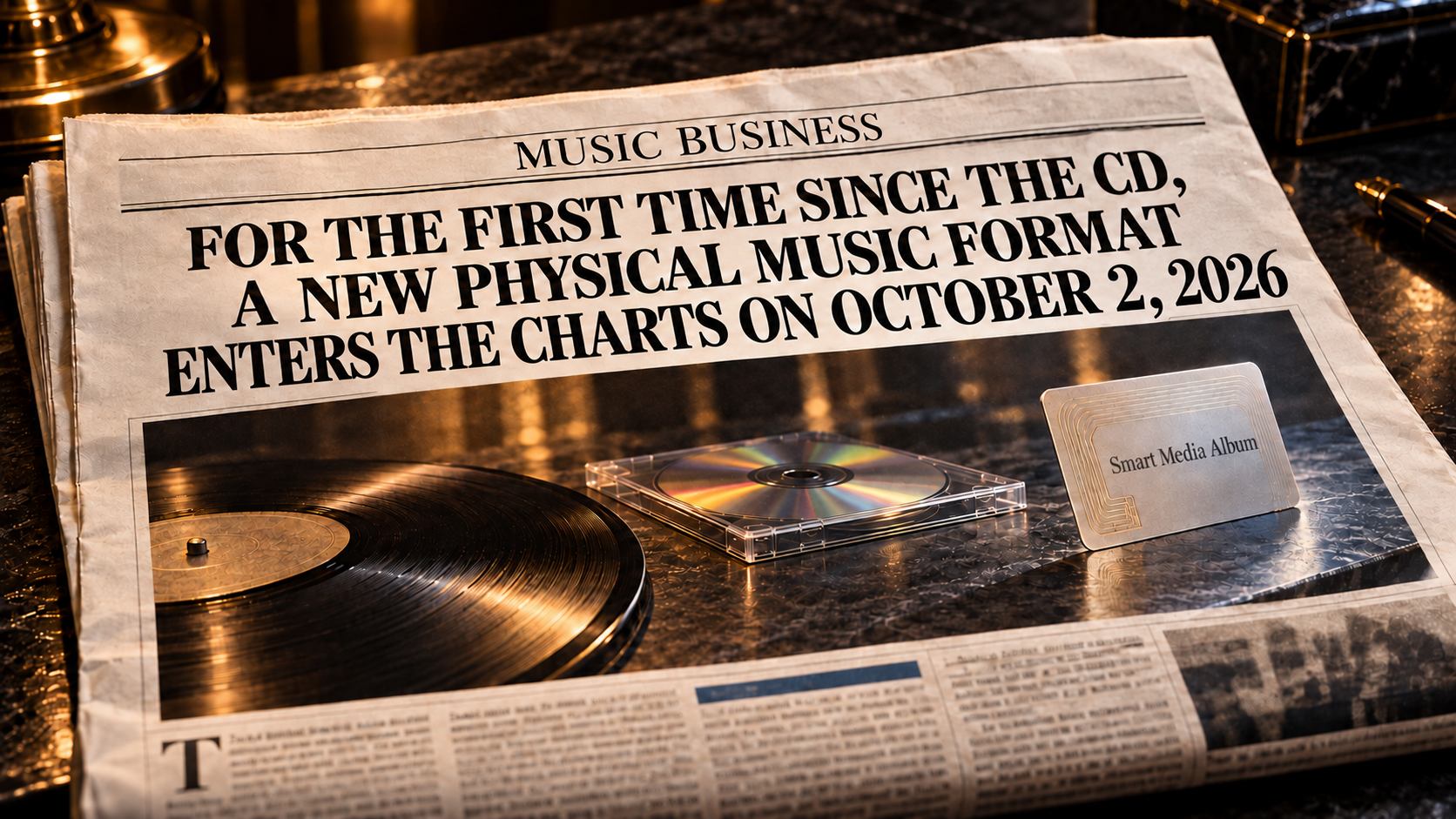
October 2, 2026 Marks a Turning Point for Physical Music.
A music collectible can be a card, a keyring or another object small enough to carry in a pocket. Tap or scan it, and an album opens on a phone. Fans have been buying products like these for years. On October 2, the U.S. and Canadian music business begins counting qualifying sales as a distinct physical format.
Luminate will add Smart Media Albums to its CONNECT sales data alongside CDs, vinyl and cassettes. Eligible sales can also contribute to Billboard chart rankings. That gives connected physical music something it has lacked: a defined place in the industry’s measurement system.
The format joins a physical purchase to a digital listening experience. A QR code, NFC chip or similar mechanism activates access to an album hosted on a dedicated app, website or platform. The object is part of the purchase and the experience, rather than packaging for a link to a conventional streaming service.
Luminate’s published guidance makes clear that recognition comes with limits.
Smart Media sales must come through approved providers. The company defines the unlocked album content as neither downloadable nor shareable, a distinction that could affect how products are built and which versions qualify. A card with a QR code is not automatically a chart-eligible Smart Media Album.
The registration rules also put a ceiling on editions. Each album project can designate no more than two Smart Media UPCs for chart eligibility across all products and approved providers. Artists releasing several collectible designs will need to choose which two to register for chart consideration. Once both have been designated, Luminate says they cannot be replaced. The order of registration matters too: if more than two Smart Media products are submitted for the same release group, only the first two are accepted for charting.
Those details turn a creative decision into a release strategy. An artist might want a standard edition, a tour exclusive, a signed VIP version and a retail collectible. All four can serve different fans, but the chart rules require a choice about which editions take priority. Product identifiers, registration and distribution now belong in the planning conversation before manufacturing begins.
October 2 does not guarantee a chart position for every connected music product.
It marks the start of tracking under a new physical category, with eligibility determined by the product, provider and registration. The first results will show how the format performs once those rules meet actual sales.
The larger change is already visible. Physical music no longer has to contain the recording to be recognized as an album product. It can be an object a fan keeps and activates to hear the music. Beginning October 2, qualifying purchases of that kind will have a place in the official count.