The Music Industry Is Changing. So Is the Value of the Music Experience.
Technology has made music easier to create, distribute and discover. The next challenge may be making it feel valuable again.
The music industry is moving through another period of rapid change.
Artificial intelligence is reshaping parts of creation, marketing and discovery. Data is becoming increasingly important to how releases are promoted. Consolidation continues across labels, publishing, distribution and music technology. Direct-to-fan platforms are giving artists more ways to reach audiences without relying entirely on traditional channels.
Yet beneath all that innovation is a remarkably simple problem.
There is more music competing for attention than ever before.
A song can be released globally within hours. Artists can reach listeners without a physical distributor. Fans have virtually unlimited music available from a phone.
Access is no longer the obstacle. Attention, connection and perceived value increasingly are.
When Convenience Becomes the Competition
Streaming fundamentally changed music consumption by making enormous catalogs instantly available. Social media accelerated discovery even further.
But the same systems that make discovery possible also make moving on incredibly easy.
Listen. Skip. Scroll. Repeat.
For artists, particularly independents, that creates a difficult equation. Being available everywhere does not necessarily mean being remembered anywhere.
Digital tools can improve marketing, analyze audiences and streamline distribution, but they cannot automatically create a meaningful connection between an artist and a listener.
That is helping drive interest in experiences that give music something beyond another digital destination.
The Physical and Digital Worlds Are Converging
Physical music is evolving alongside digital music rather than simply competing with it.
Vinyl demonstrated the enduring appeal of collecting and ownership. CDs continue to have an audience. Deluxe releases, signed products, VIP packages and artist collectibles have shown that fans will still pay for something connected to music when the experience offers additional value.
Now connected physical formats are adding another layer.
NFC, QR and other technologies can connect a physical object directly to music and digital content, creating an experience that begins in the real world but continues online.
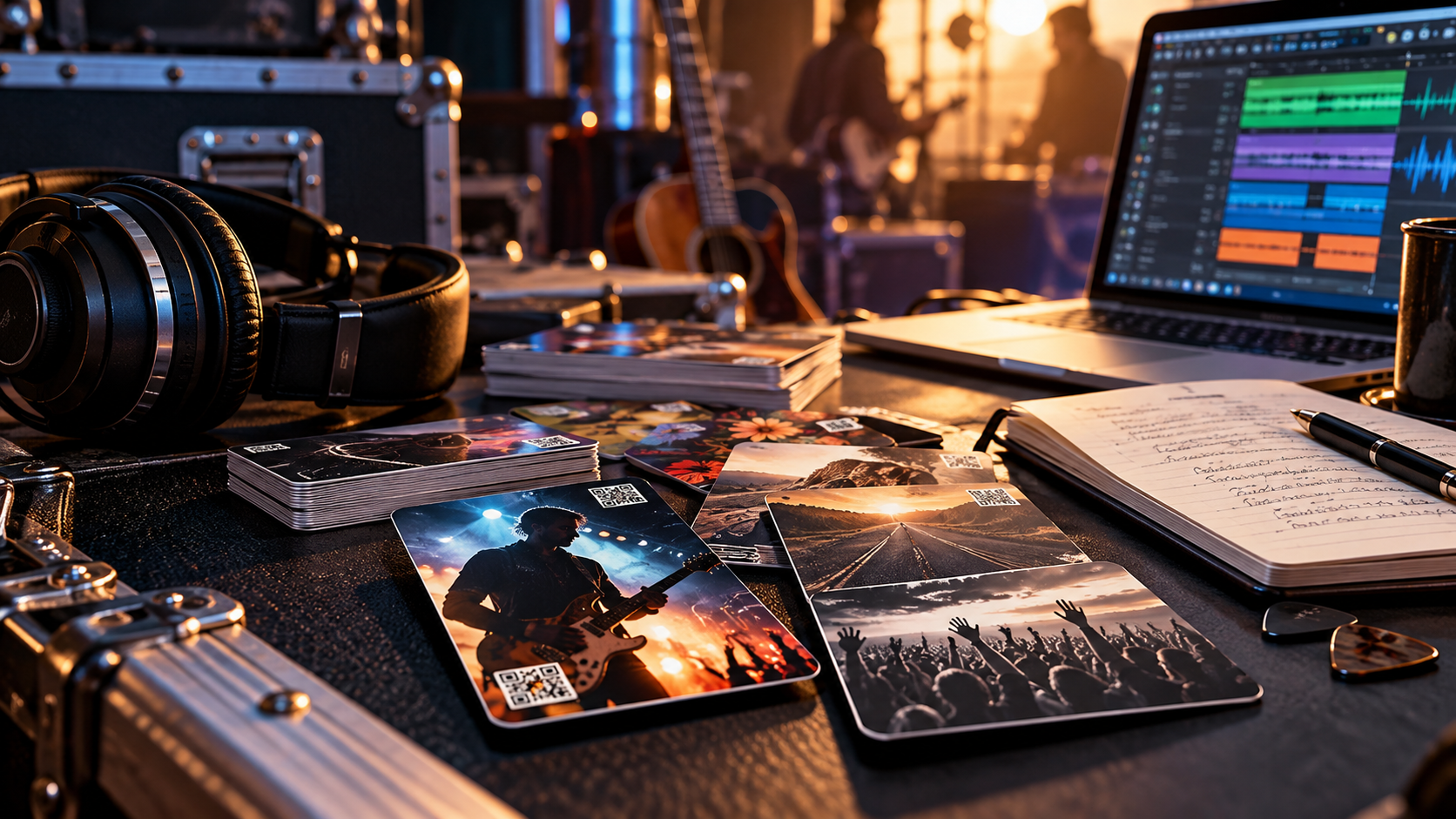
TapTunes® Music Cards operate within this emerging space, combining a collectible physical card with instant browser-based access to music and additional artist content.
The distinction is important.
The card is not simply another way to store a song. It gives the digital music a physical presence.
A Different Kind of Distribution
That physical presence can serve different purposes depending on where the music is going.
An artist can sell an album at a merch table. A songwriter can hand a song directly to someone in the industry. A VIP package can include a signed release created specifically for an event. A brand can connect a campaign to music that customers can take home.
For fans, the experience becomes collectible.
For artists, it becomes another direct-to-fan revenue opportunity.
And for industry professionals receiving music, it can turn an otherwise ordinary submission into something tangible sitting in front of them rather than another link waiting inside an inbox.
Technology Is Only Part of the Story
The music business will continue experimenting with AI, immersive media, connected products and new distribution models. Some technologies will become permanent parts of the industry. Others will disappear as quickly as they arrived.
The more important question may be what all that technology ultimately creates for the listener.
More convenience?
More content?
Or a stronger relationship with the music and the person who created it?
The next phase of music innovation may not be defined by replacing streaming or returning entirely to physical formats.
It may be about connecting the two.
Because in an industry where almost every song is instantly accessible, the opportunity may increasingly belong to music experiences that give people a reason to stop, connect and keep something.