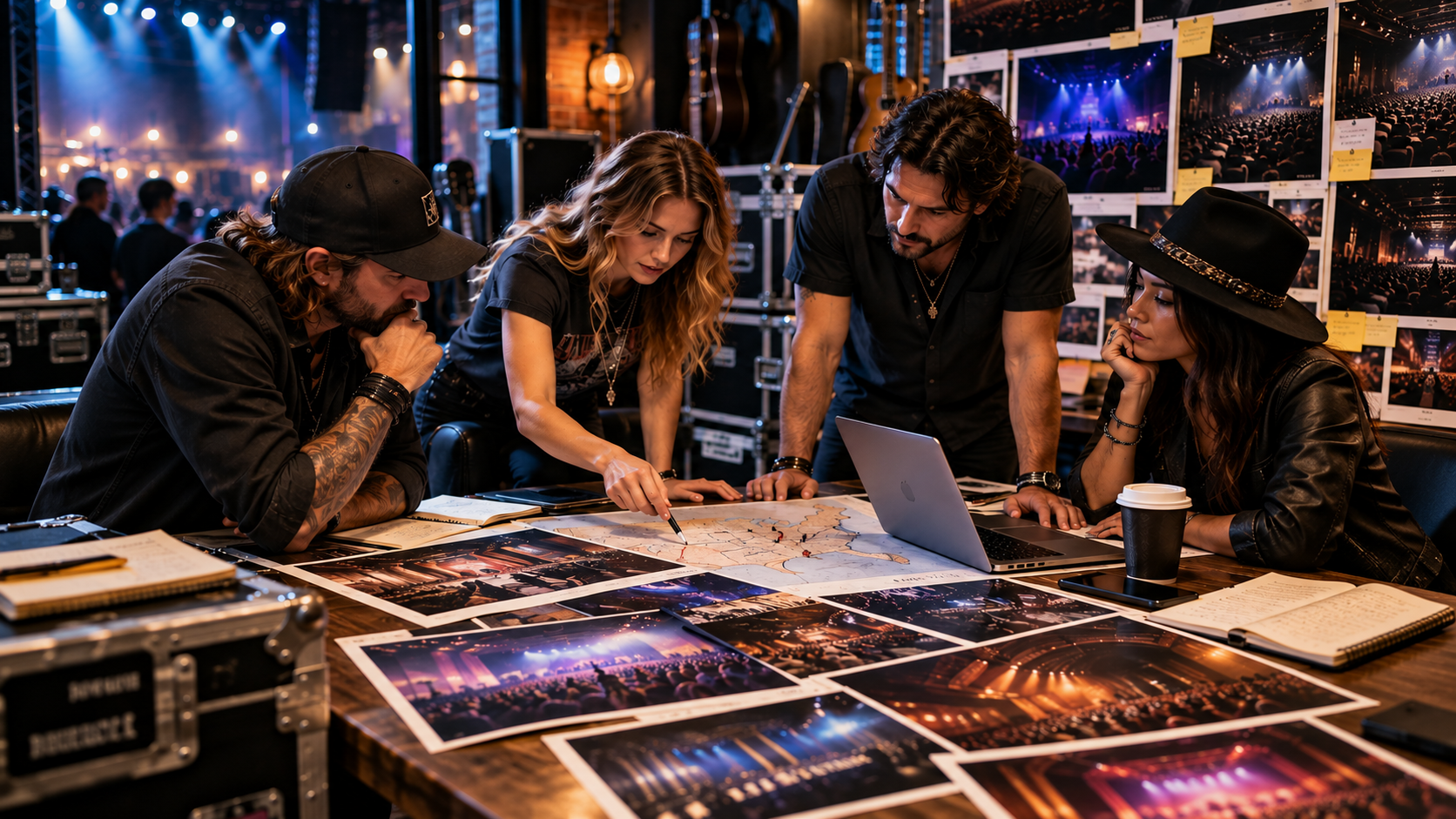
For generations of artists, touring has represented progress.
More dates, bigger rooms, longer runs and larger audiences were signs that a career was moving forward. But as the economics of live music continue to change, artists may need to reconsider whether more touring automatically means better touring.
Live music remains strong. Major tours continue generating enormous grosses and fans continue showing up for concerts. But outside the highest levels of the business, the economics can look very different. Transportation, hotels, fuel, crews, production, insurance and labor have made putting an artist on the road increasingly expensive. Venues face many of the same pressures.
The result is a touring environment where a busy calendar or even a full room does not necessarily translate into a profitable tour.
Bigger Isn't Always Better
For years, moving into a larger venue has been viewed as a natural step in an artist's growth. But there is a meaningful difference between selling 300 tickets in a 1,000-capacity venue and putting 300 people into a room built for 300.
One feels partially filled. The other feels like an event.
That difference affects atmosphere, fan perception and potentially the economics of the show. Rather than booking the largest venue an artist might be able to fill, the smarter strategy may be choosing the room that creates the strongest experience and then selling it out.
The same thinking can apply to the number of dates. Playing every available market creates more opportunities to perform, but it also multiplies expenses and can spread demand across too many shows. For some artists, 10 strategically selected dates may ultimately accomplish more than 25 marginal ones.
That could mean concentrating on markets where an artist already has measurable demand, building shorter regional runs or playing multiple nights in one market rather than moving an entire operation hundreds of miles every day.
The Show Has to Become More Valuable
The changing economics of touring also make the value of each fan in the room increasingly important.
A concert no longer has to be viewed solely as a ticket transaction. VIP experiences, limited merchandise, signed collectibles, soundchecks, meet-and-greets and event-exclusive products can create additional revenue while giving fans something they cannot get from streaming.
That does not necessarily mean making concerts more expensive for everyone. It means creating different levels of participation for fans who want them.
A fan buying a general admission ticket may simply want to see the show. Another may gladly spend considerably more for access, a signed item or an experience connected directly to the artist. Both belong in the same audience, but their relationships with the artist can have very different value.
Technology is also giving artists more information about where those relationships already exist. Streaming data, social engagement, email lists, merchandise purchases, previous ticket sales and direct-to-fan platforms can provide a clearer picture of where an artist's audience actually lives.
Tour routing no longer has to rely entirely on tradition or assumptions. Artists can increasingly ask where people are listening, buying, engaging and showing up, then build tours around that information.
Every Show Should Build the Next One
Perhaps the larger opportunity is what happens after the concert ends.
For a few hours, an artist may have hundreds or thousands of people gathered in one place because of their music. That audience represents more than ticket buyers. They can become merchandise customers, collectors, subscribers, supporters and part of a direct community around the artist.
If that relationship disappears when the house lights come on, much of the long-term value of the show disappears with it.
The modern tour may therefore need to accomplish more than moving an artist from city to city. Each performance can become an opportunity to strengthen the fan relationship, generate multiple sources of revenue and build demand for whatever comes next.
Touring isn't going away. But the definition of a successful tour may be changing.
The smartest strategy may not always be more cities, more dates or a bigger room. Sometimes growth can mean fewer shows, stronger markets, better economics and a more valuable experience for the people who actually showed up.
And sometimes the best room isn't the biggest one an artist can book.
It's the one people don't want to miss.