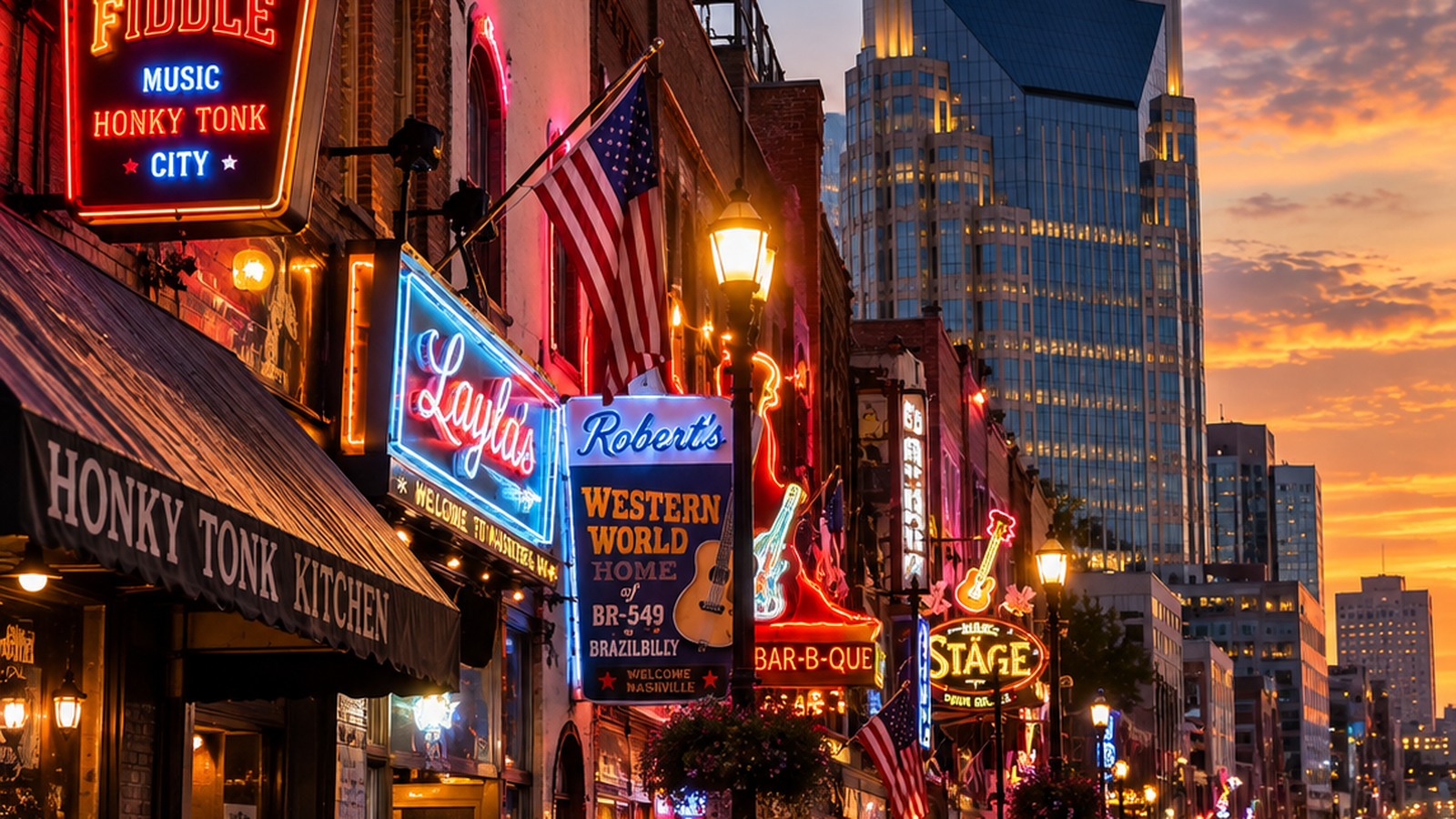
The music industry is changing quickly.
Streaming transformed consumption. Social media changed discovery. Artificial intelligence is raising new questions about creation, rights and compensation. Direct-to-fan commerce is opening new revenue opportunities, while physical music is being reimagined for a digital generation.
Through all of it, Nashville continues to evolve with the industry.
Music City has long been built around songs, studios and the companies that turn music into careers. Its next chapter is increasingly being shaped by the intersection of those traditions with technology, new business models and changing expectations from creators and fans.
A Broader Music-Business Ecosystem
Publishing, recording, touring, management, technology and direct-to-fan commerce increasingly overlap, making Nashville an important place to watch how the music business is changing.
The Nashville region's music and entertainment industry supports approximately 82,000 direct and indirect jobs and generates an estimated $17.2 billion in annual economic impact. But Nashville's strength isn't simply its size. It's the concentration of people and businesses surrounding the music.
Major labels operate alongside independents. Historic publishers share the city with music-tech companies. World-class studios coexist with home studios. Arena artists are part of the same broader community as songwriters, session musicians and independent artists playing clubs and writers' rounds.
The traditional music business and the creator economy are increasingly living side by side.
Technology Is Becoming Part of Music City
AI, analytics, artist-development tools, fan engagement and direct-to-fan platforms are changing how artists build careers and how music reaches audiences.
Nashville is increasingly part of that shift. Spotify is bringing its Fresh Finds Forward artist-development initiative to Nashville, including studio opportunities at The Lighthouse at Ocean Way Nashville. Local music-tech companies are building tools for independent musicians, while publishers, songwriters and rights organizations are becoming deeply involved in questions surrounding AI, licensing, consent and compensation.
The conversation is no longer simply about how technology can create or distribute music.
It's about how technology can help artists build sustainable businesses around it.
Physical and Digital Are Coming Together
At the same time, the industry is rediscovering the value of something physical.
Vinyl, signed merchandise, collectibles, VIP experiences and limited editions offer something streaming cannot: ownership and a tangible connection to the artist.
Now physical and digital are beginning to converge. Connected products can become gateways to music, video, exclusive content and direct artist-to-fan experiences, creating new possibilities around an album or release.
That fits naturally in Nashville, where music has never been just an audio file. It's a song, a story, a live experience and increasingly an entire ecosystem around the artist.
Music Is Expanding Beyond the Music Business
Nashville has also become particularly effective at connecting music with tourism, hospitality, sports and entertainment.
Visitors spent a record $11.6 billion in Davidson County during 2025, while major investments continue across the city, including Nashville International Airport, Bridgestone Arena and the new Nissan Stadium scheduled to open in 2027.
Even legacy music is being reimagined through experiences. Nashville's annual Dolly Day and Dolly Parton's planned SongTeller Hotel and Life of Many Colors Museum illustrate how an artist's catalog and story can extend into tourism, hospitality, merchandise and entertainment.
A song can become a destination. An artist can become an experience. Music is no longer confined to the record.
Nashville's Real Advantage
Nashville isn't the only city shaping the future of music, but it has something increasingly valuable: proximity.
Songwriters, artists, publishers, managers, labels, producers, technology companies, brands and entrepreneurs operate within a relatively concentrated community. Ideas cross industries, introductions become collaborations and relationships can move opportunities forward quickly.
That matters even more as music becomes increasingly digital.
Technology can connect almost anyone. Community creates something harder to replicate: trust.
The tools will change. The formats will change. The way fans discover, buy, collect and experience music will change. But Nashville's greatest strength has never been one format, platform or technology.
It has always been the people creating the music and the businesses built around them.
Music City isn't simply adapting to what's next. It's helping build it.