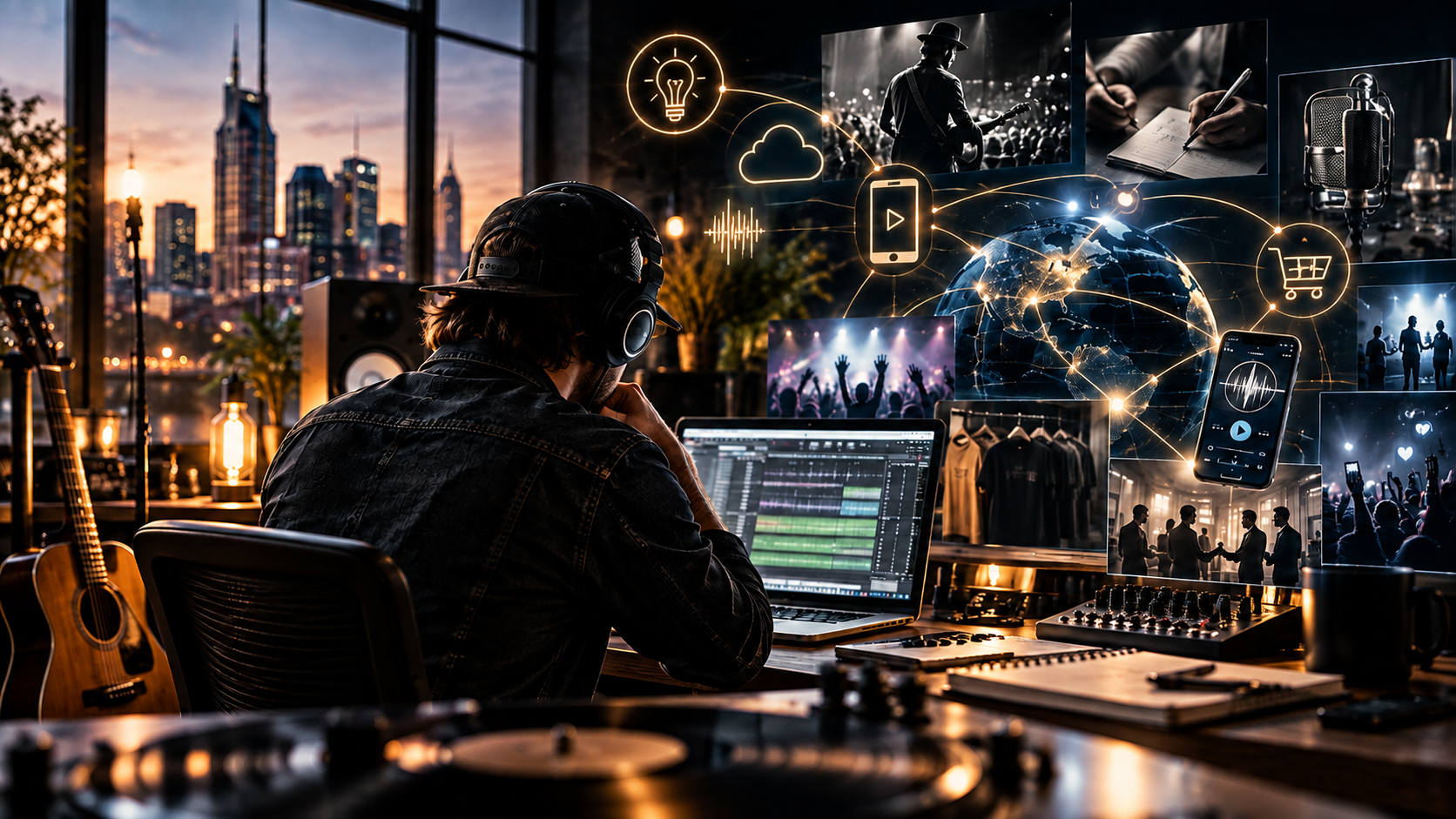
Nashville has always understood the music business. Now, increasingly, it understands the technology shaping its future.
This is a city built on songs, songwriting, recording, publishing and live performance, but Nashville is no longer simply watching the next generation of music technology develop somewhere else. Technology companies, new platforms, direct-to-fan tools and connected music experiences are becoming part of the ecosystem here, alongside the writers, artists, producers and industry professionals who built Music City.
Nashville has always been a place where artists come to build careers, not simply record songs. But what building a music career looks like today is changing.
Independent artists now operate in a market where technology can connect creation, distribution, promotion, commerce and fan relationships more directly than ever before. An artist can record a song, release it globally, promote it through social media, sell directly to fans, create physical products and understand how audiences are engaging with their music, often without the infrastructure that once stood between the artist and listener.
That creates enormous opportunity. It also creates considerably more responsibility.
More Control, More Responsibility
For independent artists, the opportunity is now much larger than simply releasing music. Getting a song onto streaming platforms is relatively easy. Getting someone to care about the artist behind that song is much harder.
Streaming can create exposure and discovery, but exposure alone does not build a sustainable career. Artists still have to turn listeners into fans and fans into people willing to show up, buy something, share the music and remain connected.
That means today's independent artist increasingly has to think like both a creator and a business owner. Who is listening? Where are they finding the music? What happens after they listen? How does that relationship continue?
Those questions are becoming just as important as where the next song will be distributed.
From Audience to Community
For years, much of the digital music conversation centered on reach: more streams, followers, views and impressions. Those numbers still matter, but a large audience and a connected audience are not necessarily the same thing.
An artist may reach thousands of people through a playlist, social post or recommendation algorithm without ever establishing a direct relationship with them. That is where direct-to-fan strategy becomes increasingly important.
Live experiences, artist websites, email, memberships, exclusive content, VIP experiences, merchandise and physical music can give artists additional ways to remain connected after that first listen.
The goal isn't to eliminate streaming. It's to build beyond it.
Streaming can introduce the music. The artist still has to build the relationship.
Music Can Be a Product Again
One of the most interesting opportunities for independent artists may be the return of music itself as something to sell.
For decades, radio helped people discover songs. When listeners loved what they heard, many went out and bought the record, cassette or CD. The digital era changed that path. Today, a fan can discover an artist, stream an entire catalog, watch videos and follow them on social media without ever purchasing the music.
That created an unusual gap between discovery and ownership.
Now physical music is evolving alongside digital technology. Vinyl continues to appeal to collectors, while connected formats such as Smart Media Albums and Music Cards are creating additional ways to turn releases into physical products with digital experiences.
For an independent artist, an album, EP or single can become merchandise again. It can be sold at a show, signed, numbered, collected, included in a VIP package or offered as a limited edition.
The music itself becomes part of the merch table.
Technology Should Create Leverage
Technology has given independent artists extraordinary capabilities, but access to technology is not the same thing as control.
An artist can build an enormous following on a platform and still depend on that platform's algorithm, policies and access to audience data. That distinction matters.
Artists need tools that help them build direct relationships with fans rather than simply rent attention from platforms. The most valuable technology may ultimately be the technology that becomes almost invisible, helping artists understand their audience, communicate directly, sell products and create experiences without inserting another barrier between artist and fan.
The goal shouldn't simply be more technology. It should be more artist leverage.
Nashville's Independent Advantage
This evolution feels particularly relevant in Nashville, a city long built around songs, live performance, songwriting, publishing, recording and the relationships that turn music into careers. Now those traditions are meeting a new generation of tools.
For an independent Nashville artist playing clubs, writers' rounds, showcases, festivals and regional tours, every appearance can become more than a performance. It can be an opportunity to meet listeners, sell music, build a fan base and continue that relationship long after everyone leaves the room.
That is where the physical and digital worlds begin working together.
The show creates the moment. Technology can help the relationship continue.
The Independent Artist as Entrepreneur
Perhaps the biggest change is philosophical. Independent no longer has to mean waiting to be discovered.
Artists have more opportunities to build something themselves: an audience, products, a brand, a community and ultimately a business. That doesn't make the path easy. In some ways, it makes it harder. More control means more decisions, greater responsibility and more work beyond creating music.
But it also means artists can begin building value around every listener rather than depending entirely on streams, algorithms or someone else's platform.
The next era of independent music may not be defined by a single technology or business model. It may be defined by something much simpler:
Artists having more ways to own what they create, understand who supports them and build direct relationships with the people who care about their music.
For Nashville's independent artists, that could be one of the biggest opportunities of all.