And the story goes like this...Something interesting is happening in the music business.
For years, so much of the conversation has centered around streaming, discovery, playlists and getting more listeners. Then came September 8, 2026, when Luminate announced it would begin tracking Smart Media Albums as a physical music category.
And the floodgates opened.
Suddenly, conversations around physical music, smart media, collectibles, NFC technology and new ways for artists to connect directly with fans became much louder. But the bigger conversation isn't simply about a new music format. It's about the fan.
What happens after someone becomes a fan? How do you turn that listener into someone who buys the album, comes to the show, purchases the merch, joins the VIP experience and stays connected to the artist?
In other words, what does a superfan actually want from an artist today?
The Superfan Is Becoming More Important
A superfan isn't simply someone who streams a song over and over. They're the people who show up. They buy the ticket and the merchandise. They know the lyrics. They want the signed copy, the VIP experience and the story behind the song. When they truly connect with an artist, they want to be part of what comes next.
Luminate's 2026 Midyear Report found that 20% of U.S. music listeners qualify as superfans, meaning they engage with artists and music in five or more different ways.
That is a significant part of the music audience, and I believe we're only beginning to understand the opportunity. Today's superfan doesn't necessarily need more music. There is already more music available than anyone could possibly listen to.
They want more from the music they already love.
That's Why We Built TapTunes®
When we started TapTunes in January 2023, there wasn't an industry category called Smart Media Albums. We weren't waiting for one. We saw an opportunity to create a physical music product that could give fans something tangible while opening the door to something much bigger.
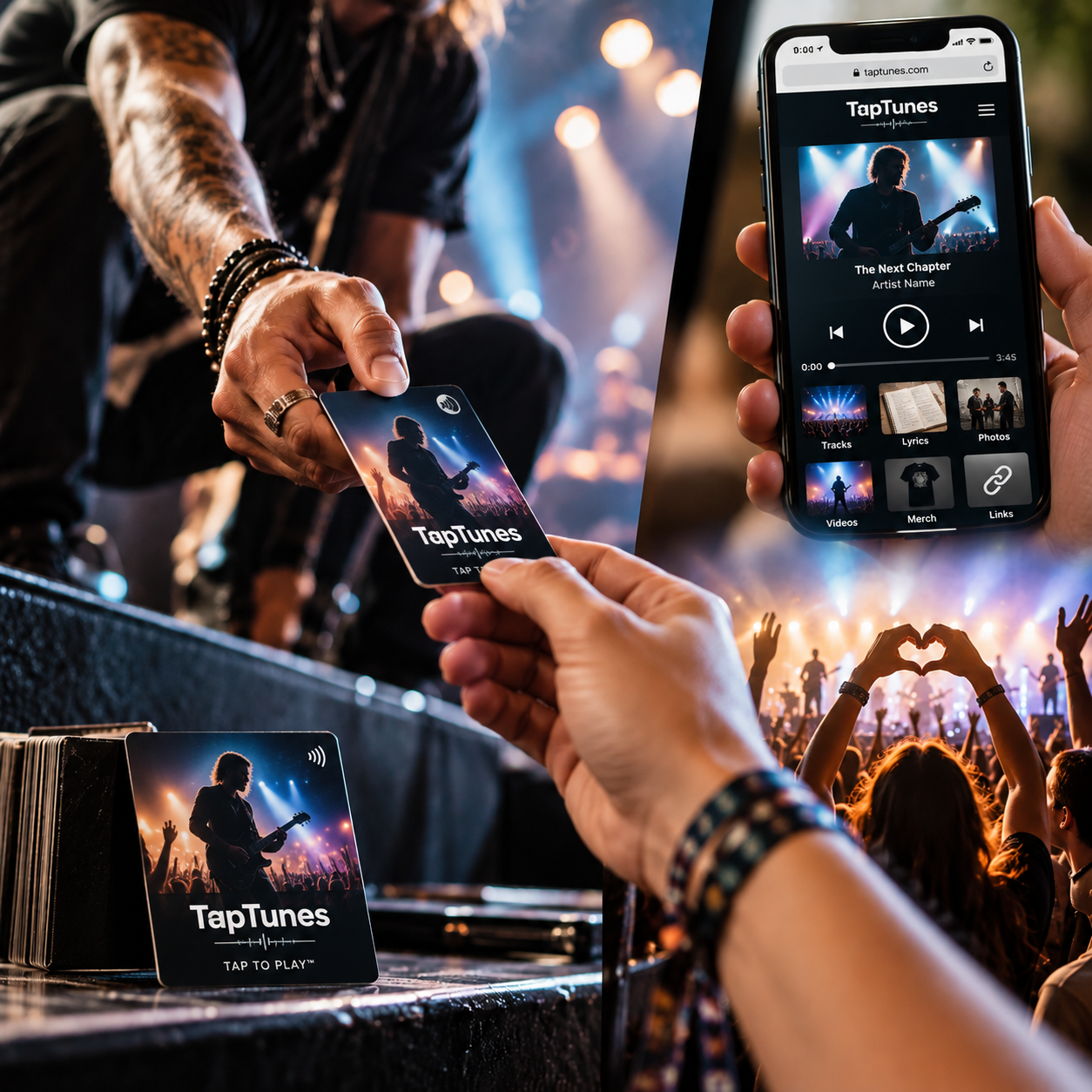
That became the TapTunes Music Card.
But it's not just a card.
It's a physical collectible that unlocks an artist's craft, music and story.
With a tap or scan, the fan enters the artist's TapTunes experience. The music is at the center, but surrounding it can be the pieces that bring the project to life: the lyrics they wrote, the liner notes behind the record, photographs from the journey, videos, artwork, personal messages, bonus tracks, merchandise and links that keep the fan connected.
No app. No login. No download. No subscription.
Think about everything that goes into creating an album. The writing, recording, musicians, producers, artwork, photography and countless hours spent turning an idea into a finished body of work. Too much of that story can disappear when the final experience becomes nothing more than a song title and a play button on a screen.
A TapTunes Music Card gives artists a place to bring that story back together.
The card becomes the physical connection to the artist's world. It can be held, collected, displayed and signed, while the experience it unlocks gives the fan an opportunity to go deeper into the music and the people who created it.
For a superfan, that's important.
They're not simply buying another way to hear songs they can already stream. They're buying something connected to an artist and a body of work they care about.
And when that Music Card is tied to a concert, listening party, album release or VIP experience, it becomes something else entirely.
It becomes part of the memory.
Where VIP and Physical Music Come Together
This is where physical music and the superfan economy really begin to connect.
Imagine attending an album listening party with 100 other fans. Instead of leaving with a QR code or being told where to stream the album, every VIP receives a Music Card designed specifically for that night. The artwork could be exclusive. The artist could sign it. A personal welcome message or bonus track could be waiting inside the player, and additional content from the event could even be added afterward.
Now the fan isn't simply taking home the music. They're taking home a piece of the experience.
We've watched artists and their teams use TapTunes Music Cards for listening parties, VIP events, tours, album releases and merch tables. There is something completely different about watching an artist sign a physical piece of their music and hand it directly to a fan.
The value isn't simply what the product costs. The value is what it represents.
That same album can also become several different collectibles: a standard edition, signed edition, tour edition, listening-party edition, VIP edition, anniversary release or event-exclusive design. Different moments can become different physical representations of the artist's story.
The Direct-to-Fan Opportunity
There is also a business side to this conversation that shouldn't be overlooked.
Artists need sustainable ways to make money from their music. Streaming plays an important role in discovery and listening, but direct-to-fan creates another opportunity entirely.
With TapTunes, artists purchase their Music Cards, determine their own selling price and keep 100% of what they make selling them. It's their music. They should be making money from it.
A Music Card can be sold at a merch table or online, bundled with a ticket, included in a VIP package or created specifically for a tour, release or special event. Through the TapTunes control panel, artists can also see engagement analytics connected to their cards.
The physical product and digital experience are no longer two separate things. They work together.
Maybe We're Asking the Wrong Question
For years, artists have been encouraged to focus on streams, monthly listeners and playlist adds. Those numbers matter, but perhaps there is another question worth asking:
How many people truly care?
Who buys the ticket? Who drives three hours to the show? Who wants the signed album? Who wants to know the story behind the song? Who wants the VIP experience? Who wants something from the artist that isn't available to millions of other people simply by opening a streaming app?
Those are the fans worth building for.
The future of music doesn't have to be a choice between physical and digital. It can be both.
Streaming can introduce someone to an artist. Social media can tell the story. Live music can bring the fan into the room. VIP can bring them closer. Physical music can give them something from that relationship they can actually keep.
Perhaps the biggest opportunity created by the Smart Media Album conversation isn't simply another music format. Maybe it's getting the industry to think differently about the people who care the most.
The superfans.
They want to experience the music, support the artist, collect something meaningful and feel closer to the people who created the songs they love.
Streaming gives fans access to the music.
Artists can give them a reason to keep it.