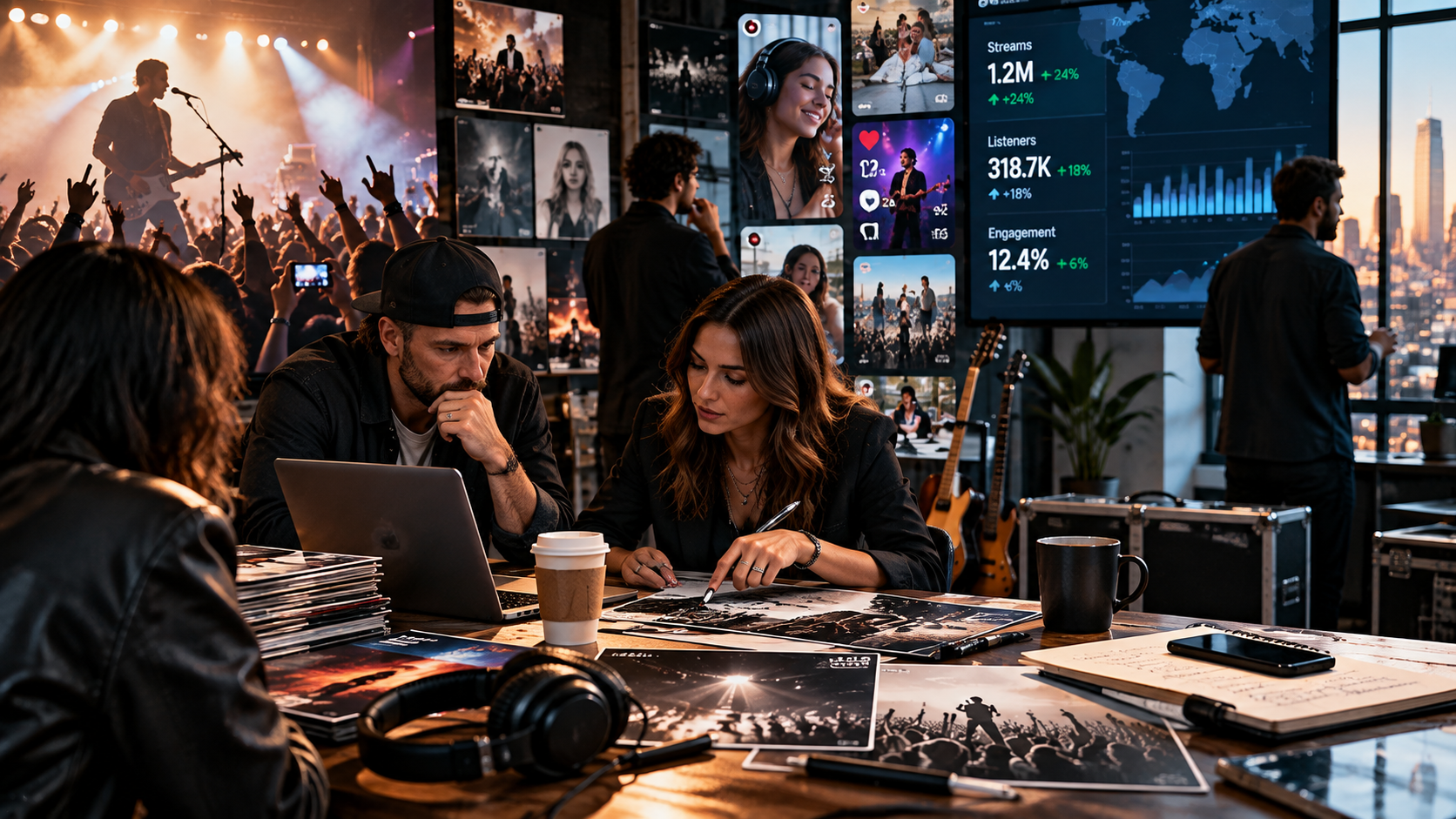
Music has never been easier to release or discover.
But in an increasingly crowded digital world, getting someone to stop, listen and remember is becoming one of the industry’s biggest challenges.
Music moves fast. Attention moves even faster. A new song can reach listeners around the world within hours, independent artists have access to distribution channels once controlled by major companies, and social platforms can introduce an unknown artist to millions of people almost overnight. But every release now enters an environment filled with playlists, short-form video, social posts, advertisements, notifications, podcasts and an almost unlimited supply of other music.
The challenge is no longer simply getting music in front of people. It is getting them to care.
Artists can spend months writing, recording and producing a song that a listener may decide to skip within seconds. Labels and marketing teams are competing for those same seconds, while producers, publishers and music supervisors face an endless flow of new material. Streams, views and clicks still matter, but increasingly the bigger question is what happens after that first interaction. Does someone remember the artist? Listen to another song? Follow them? Buy a ticket or album? Tell someone else?
Technology removed many of the barriers that once limited how much music could reach the marketplace. That democratization created extraordinary opportunities for independent artists, but it also dramatically increased the amount of music competing for listeners. The result is a strange contradiction: music is easier to find than ever, yet individual songs can be harder to remember.
That is forcing the industry to think beyond distribution. Artwork, storytelling, live performances, social content, merchandise, physical releases, fan communities and direct interaction are increasingly part of the larger experience surrounding a release. The song remains the foundation, but discovery alone does not necessarily create a lasting fan.
One of the more interesting developments is the renewed emphasis on experiences that cannot be reduced to another stream. Concerts create shared moments. VIP experiences offer access. Vinyl, CDs and collectibles give music a physical identity. Listening events turn a release into an occasion. Fan communities create belonging. None of these replaces streaming. Instead, they provide something streaming was never necessarily designed to deliver: ownership, participation, exclusivity and memory.
Brands are confronting the same attention problem. Music remains one of the most powerful ways to create an emotional connection with an audience, but simply placing a recognizable song in an advertisement is no longer the only opportunity. Artist collaborations, live events, exclusive releases and music-driven activations are increasingly capable of turning music into part of the consumer experience itself. For artists, those partnerships can also create revenue and introduce music to audiences outside traditional channels.
The music industry spent decades solving the problem of access. Today, almost everything is accessible. That makes the next challenge fundamentally different. It is no longer simply whether people can find the music, but whether they will stop long enough to experience it and remember it tomorrow.
In a business capable of delivering virtually any song to anyone at any moment, attention may be becoming one of music’s most valuable currencies.