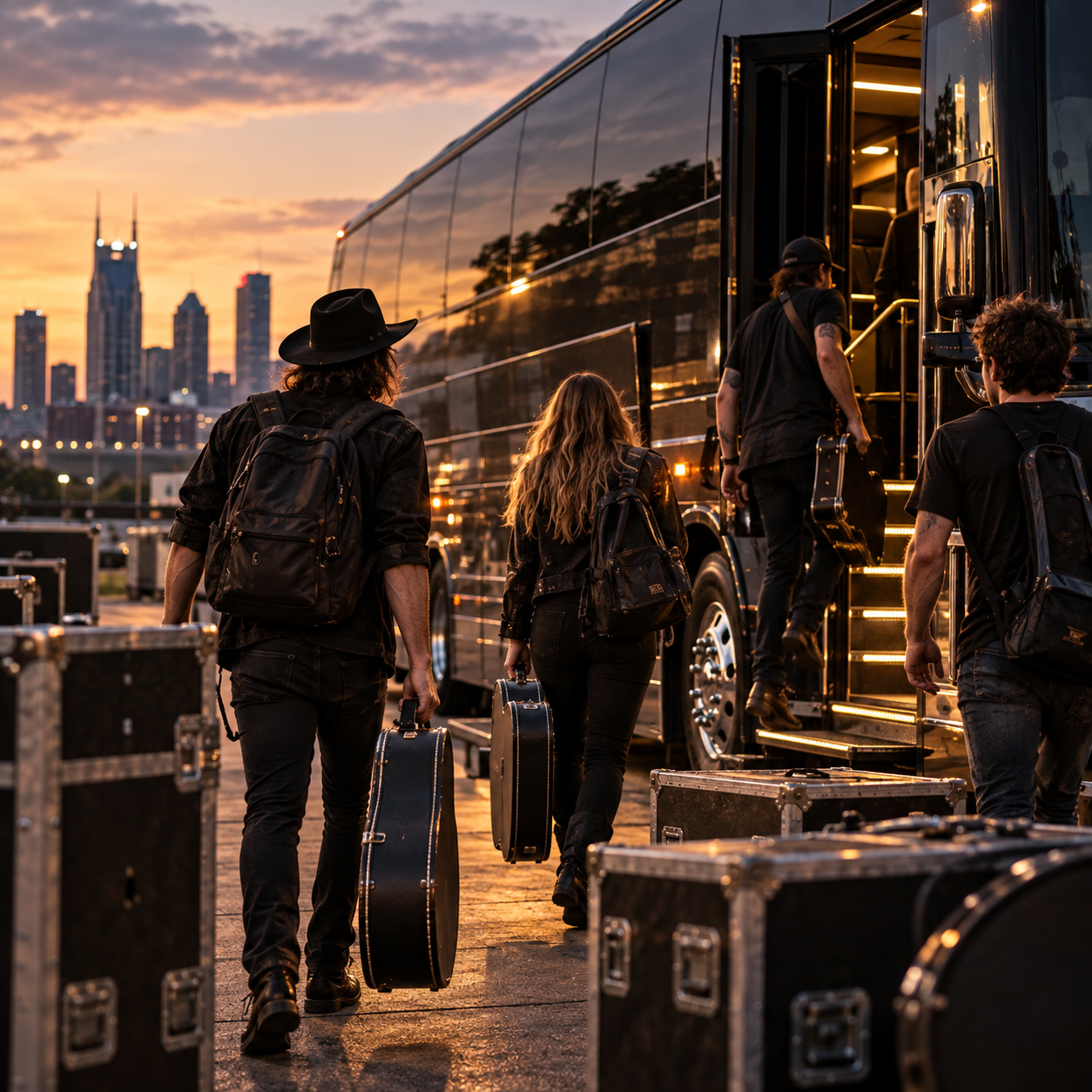
Touring remains one of music’s strongest connections, but the road requires more strategy than ever.
There is still nothing quite like live music. Streaming can introduce an artist, social media can build an audience and a recording can travel around the world, but seeing an artist perform in the same room creates a connection that digital platforms cannot fully replicate.
That makes live performance incredibly valuable. It also makes the business of touring increasingly complicated.
Today's tour is a moving operation involving venues, routing, transportation, lodging, production, ticketing, promotion, merchandise and schedules that have to work together night after night. For independent and developing artists especially, simply booking more shows isn't necessarily the goal. The dates have to make sense.
Touring Smarter
A successful tour begins long before the artist reaches the stage.
Routing can determine whether a run is profitable or unnecessarily expensive. Fuel, hotels, transportation, crew, meals and production costs can quickly turn a busy calendar into a financial strain.
The audience calendar matters too. Artists are competing with major tours, festivals, sporting events and other entertainment for the same fan's time and money.
That is why more artists are thinking strategically about regional runs, support slots, festival appearances and concentrated dates rather than assuming that more shows automatically equal more success.
Touring smarter can sometimes mean touring less.
The Right Room Matters
Venues remain an essential part of the music ecosystem, particularly for developing artists.
They are where performers learn how to hold a room, where local scenes grow and where someone who casually knows a song can become a real fan.
Nashville continues to demonstrate the importance of that ecosystem. Earlier this year, 615 Indie Live brought more than 60 local artists to 15 independent venues across the city in a single day.
But bigger isn't always better.
A packed smaller venue can create more energy and connection than a larger room filled with empty seats. Choosing the right room for the audience can matter just as much as choosing the city.
Every Show Has to Do More
For today's independent artist, a live performance can create value far beyond ticket sales.
It can sell merchandise, introduce new music, generate content and give artists an opportunity to build relationships directly with the people supporting them.
That makes the moments before and after the performance increasingly important.
A fan who has just experienced an artist live may want something that carries that experience home: a shirt, vinyl record, signed item, Music Card or limited-edition release.
The merch table isn't simply retail. It can be the next step in the relationship.
And technology now allows that relationship to continue long after the artist leaves town. Fans can follow, join a mailing list, access exclusive content, purchase music and stay connected between releases and future tour dates.
The show creates the moment. What happens afterward can build the fan.
The Road Still Matters
For all the technology surrounding music today, the fundamental power of touring hasn't changed.
An artist walks onto a stage. People gather. Music fills the room.
That experience cannot be completely recreated through a screen, stream or algorithm.
What has changed is everything surrounding it.
Today's strongest touring strategies combine smart routing, the right venues, realistic economics, merchandise and direct fan connection. The goal isn't necessarily to play everywhere. It's to make every stop matter.
The road is still where artists build fans one room at a time.
And today, that room can be the beginning of a relationship that lasts long after the final song.