Streaming solved music’s access problem.
Now the industry is discovering that access and ownership can create very different kinds of value.
For more than a decade, the recorded music business has been built around access. That model is not retreating. Global on-demand audio streams continued to grow in the first half of 2026, while streaming remains the dominant source of recorded music revenue worldwide.
But another part of the market is becoming increasingly difficult to dismiss.
Physical music is growing alongside streaming. Global physical-format revenue increased 8% in 2025, with vinyl rising 13.7% for its 19th consecutive year of growth. In the U.S., 16.3 million CDs were sold during the first half of 2026, up 16%. Even after removing K-pop sales, CD growth remained 6.7%.
Those numbers suggest something more interesting than nostalgia. Listeners who already have virtually unlimited access to music are still choosing to buy it.
The distinction matters. Streaming provides convenience, reach and discovery. Ownership provides something different: permanence, identity, collectibility and a physical connection to an artist or release. A listener does not need a vinyl record or CD to hear the music. Purchasing one is increasingly a separate decision about the relationship they want to have with it.
That behavior is particularly visible among highly engaged fans. Luminate reported this year that 20% of U.S. music listeners qualify as superfans based on engaging with artists and music in five or more ways. Gen Z and Millennials account for a disproportionate share of engagement-based superfandom, reinforcing the idea that younger audiences are not abandoning physical music simply because they grew up with streaming.
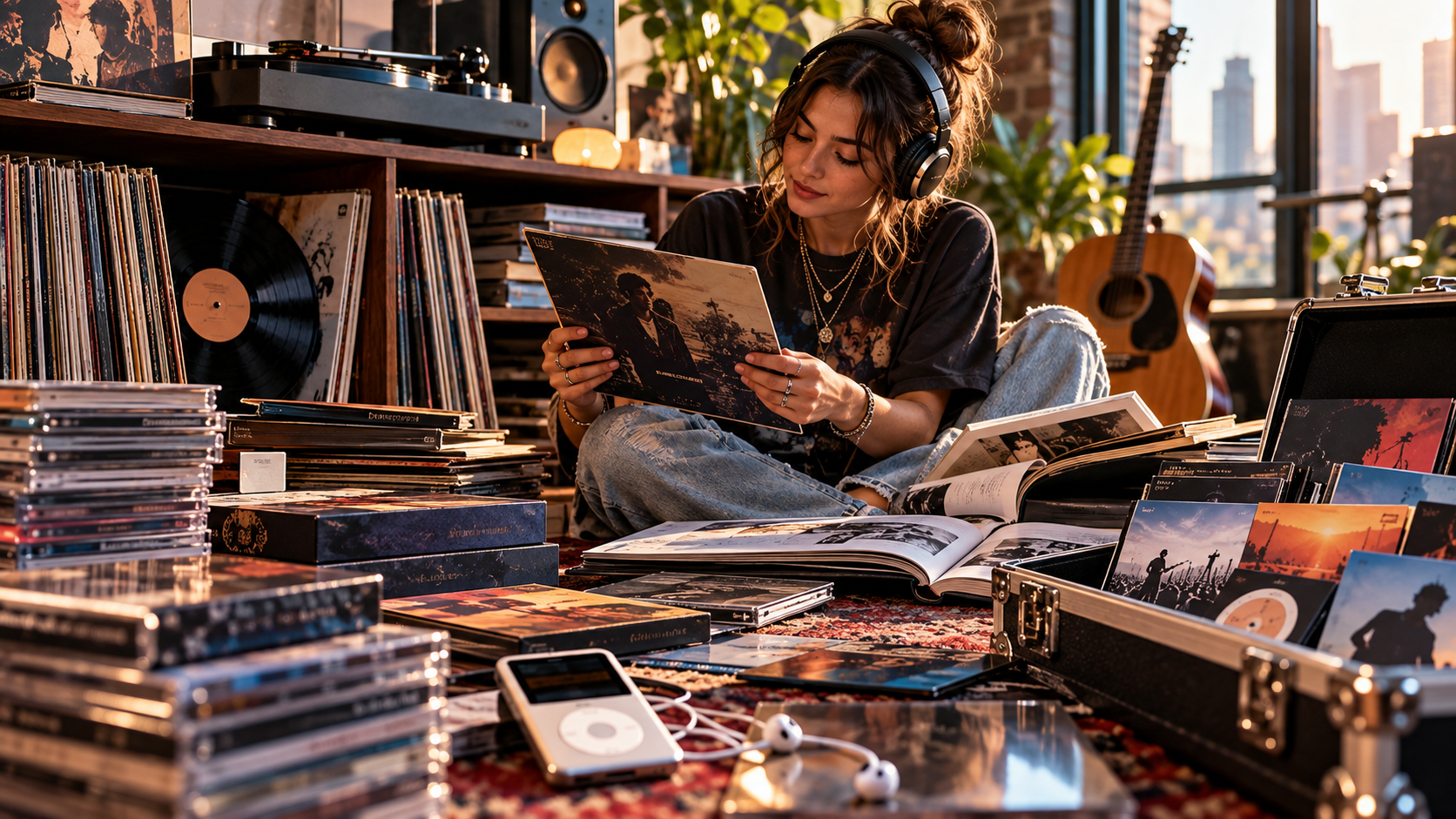
Perhaps one of the most revealing statistics is that roughly half of Gen Z and Millennial CD buyers do not own a CD player. In that context, the disc is not necessarily being purchased primarily as a playback device. It can function as merchandise, artwork, memorabilia and a physical representation of fandom.
Even the renewed interest in the iPod fits into the larger picture. Secondhand and refurbished devices have attracted a new generation of listeners looking for dedicated, distraction-free music experiences and greater control over personal libraries. Refurbished iPod sales on Back Market reportedly increased 48% in 2025. It remains a relatively small cultural movement compared with streaming, but it is an interesting signal: some listeners are actively seeking ways to experience music outside the endless feed.
Collectibility Is Moving Beyond Traditional Formats
The next development may be even more consequential for the physical market.
In September 2026, Luminate announced that it would begin tracking Smart Media Albums, physical products that unlock an album and accompanying digital music experience when activated. The category has roots in Asian markets and K-pop fandom but is now expanding internationally and gaining traction in the United States.
That development expands the definition of what a physical album can be.
For decades, the object and the playback format were essentially the same thing. A vinyl record played the recording. A cassette played the recording. A CD played the recording.
Connected physical products separate those functions. The object can provide the ownership and collectible experience while digital technology handles playback and additional content.
That creates an entirely different canvas for artists, labels, estates and catalog owners. A physical release no longer has to be defined by a disc or record. It can become a gateway to music, artwork, video, archival material and other experiences while retaining the tangible qualities that make physical music collectible.
Access and Ownership Are Becoming Complementary
None of this points toward the decline of streaming. Streaming continues to expand globally and remains the dominant way people consume recorded music.
The more interesting development is that streaming and ownership increasingly serve different purposes.
Streaming answers the question: What do I want to hear?
Ownership answers another: What music means enough to me that I want something connected to it?
That distinction could become increasingly important as the industry focuses on superfans and direct-to-fan economics. A casual listener may generate streams. A deeply engaged fan may stream the album, attend the concert, buy merchandise, purchase a physical release and collect multiple editions.
The industry spent years building infrastructure around making music available everywhere.
The next opportunity may be figuring out what listeners still want to own when everything is already available.